The Partition of India in 1947 remains one of the most traumatic events in the history of the subcontinent. Millions were displaced, thousands were killed, and centuries of shared life between communities were fractured almost overnight. For Indian English literature, this moment became a defining historical and imaginative challenge. Writers sought to capture not merely… Continue reading
Post Category → Literature
John Donne: The Metaphysical Poet and His Enduring Legacy
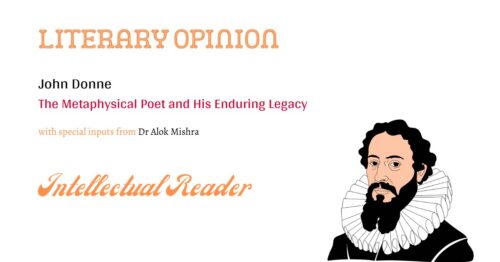
John Donne occupies a unique place in the history of English poetry, bridging the fervent spirituality of the seventeenth century and the intellectual complexity that would inspire generations of poets to come. His works, simultaneously devotional and sensuous, intellectual and emotional, display a mind ceaselessly engaged in reconciling contradictions of faith, love, and existence. As… Continue reading
Rohinton Mistry – letters to India from abroad – how authentic is his diasporic vision of India? Has it stuck in the emergency era?
The question of whether diasporic writers like Rohinton Mistry possess a prejudiced or unclear view of India is complex and warrants careful examination. Writers who leave their homeland often carry with them a version of India frozen in time, which may evolve into a nostalgic or critical lens over time. This phenomenon is not unique… Continue reading
The Genders of Storytelling: Exploring the Subtle and Stark Differences Between Fiction by Men and Women
The question of whether fiction written by men differs meaningfully from that authored by women is neither new nor easily answered. The domain of literature, particularly fiction, has long served as a mirror to the human condition. Still, it is not a neutral mirror—it is refracted through the lives, bodies, and experiences of those who… Continue reading
Sri Aurobindo and his contributions to the growth of Indian English Literature – an opinion

Sri Aurobindo’s Contributions to Indian English Literature: An Intellectual Exploration Sri Aurobindo Ghose (1872–1950) occupies a unique and enduring position in Indian English literature. A polymath whose contributions span the domains of philosophy, spirituality, and socio-political thought, Aurobindo also made profound contributions to literature, enriching the Indian English literary canon with works of exceptional depth… Continue reading
Half-Girlfriend, a half-baked attempt… analysing Chetan Bhagat’s bestselling, but casual romance novel
Chetan Bhagat, a literary impresario with a penchant for the bestseller’s podium, treads the fine line between literary craftsmanship and mass appeal with finesse. While critics may scoff at the simplicity of his prose and the perceived shallowness of his narratives, Bhagat stands as a literary entrepreneur who possesses an uncanny knack for transforming the… Continue reading
George Orwell’s 1984 – the novel that symbolises an ever-lingering dystopia
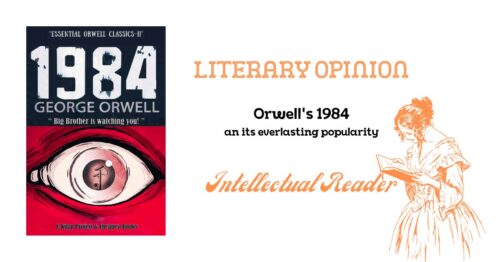
Who may forget 1984, the novel by celebrated author George Orwell? The novel became a sensation very soon after its publication. However, the popularity of this novel keeps increasing with every passing year. The fear that the world might be inching towards an authoritarian regime is always there. And as long as this fear remains,… Continue reading
A heap of broken images – an investigation into the world of The Waste Land by T. S. Eliot

The Waste Land has made for itself a special room in the world of literature. Across languages, beyond the physical and geographical boundaries, and in schools and educational institutions around the world, T. S. Eliot has a special place because of The Waste Land – the most widely studied English poem of the 20th century… Continue reading
What can a poem do? A walk with verse
While there are many eulogies written for the power of poems, have we ever thought about how poems can do so many magical things? The time is now! In this article, I will explore the world of poetry that’s not only powerful but also full of rhythm and divinity, sorrows and sufferings, vigour and winning,… Continue reading
Understanding Indianness in Indian English Poetry requires an understanding of India first – Alok Mishra
“When I first read about this concept in M. K. Naik’s book, I was curious to inquire further. Indianness in Indian English Poetry is my research topic now. The deeper I go into this abyss, the more I know about India.” Tells Alok Mishra, a noted Indian English poet and literary critic, about his acquaintance… Continue reading