
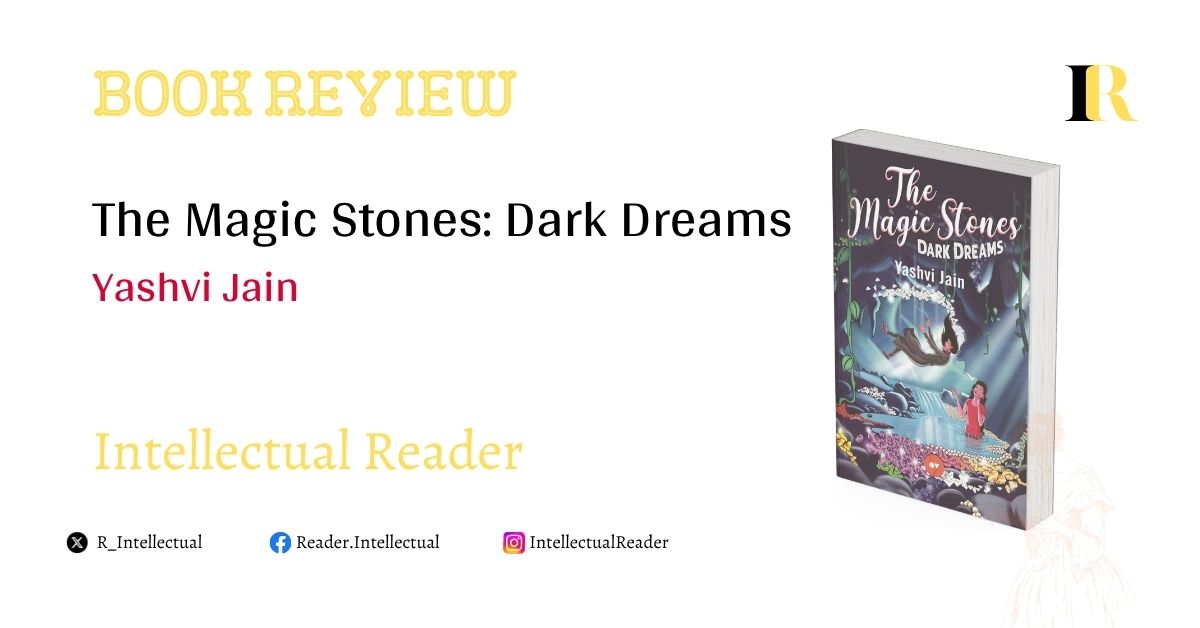
Finding good books for young children has certainly become a clumsy task, especially with all the conundrums surrounding the originality of literature. The sudden dawn of generative AI and authors’ inclination to let their imagination be guided by it may have made the choice of good books way more difficult than we can imagine. Navigating sections on Amazon, I finally stopped at Yashvi Jain’s The Magic Stones: Dark Dreams, the debut work by a children’s author who is herself young. The work is an ambitious debut that announces the arrival of a young writer with an unusually active imaginative faculty. First published in March 2021, the book is structured as a ten-chapter fantasy-adventure and is centred on Flora Bennett, her best friend Rosy Kelly, and their friend James. The first impression was good. The characters called for trans-regional attention. The narrative begins in a setting immediately accessible to its intended readership: a Halloween carnival, where the excitement of rides, costumes, candy floss and haunted attractions provides the backdrop for a mystery involving a mysterious prankster. Flora, however, is not an entirely ordinary child. She possesses the secret ability of telekinesis, which she initially keeps hidden from Rosy. From this familiar beginning, Jain steadily pushes her protagonists towards increasingly strange circumstances, introducing clues, riddles, secret passages, supernatural encounters and the mysterious magic stones that ultimately open the narrative towards a much larger world. The book’s greatest immediate strength is therefore its sense of possibility. Jain is not cautious with her imagination. She is willing to move quickly from the everyday to the extraordinary, and she understands that children’s fantasy thrives on precisely this movement. The result is a story that continually asks its young readers to suspend ordinary expectations and accept that the next discovery may be stranger than the previous one. Yet The Magic Stones: Dark Dreams is more than an exercise in inventiveness. Beneath its energetic adventure narrative is a young author’s first attempt to construct a fictional universe and, importantly, to understand what such a universe can offer its readers.
The book’s narrative design is especially effective in its early movement from mystery to fantasy. The carnival initially functions almost like a conventional children’s mystery. A prankster appears to be frightening and injuring visitors, clues emerge, and Flora and Rosy decide to investigate. Their investigation takes them into increasingly improbable situations, including a passage into a cave associated with the rainbow ghosts. The transition is handled through the logic of discovery rather than through a sudden explanatory exposition, allowing one mystery to generate another. A particularly characteristic sequence finds Flora and Rosy following a suspicious figure into the rainbow ghost area, falling through a trapdoor and discovering a cave filled with colourful gems, pearls and diamonds. Jain has a clear instinct for visual storytelling here. Her imaginary environments are constructed through colour, movement and unusual physical details, making them easy for a young reader to picture. She also understands the importance of giving children active protagonists rather than passive observers. Flora and Rosy investigate, improvise, solve clues, confront obstacles and repeatedly make decisions for themselves. Even the suspense is frequently filtered through their personalities. When the protagonists encounter danger, the narrative does not abandon their youthful perspective. Humour, irritation, curiosity and fear coexist. This gives the book a conversational quality that is likely to be one of its strongest attractions for younger readers. Jain’s characters sound like children negotiating an extraordinary situation rather than adults speaking through child characters, and that distinction gives the narrative an accessible authenticity.
Stylistically, however, the book reveals both the considerable promise and the obvious limitations of an emerging writer. Which, to be honest, remains imperative with young debutants. Jain writes in the first person through Flora, a choice that allows the narrative to remain closely attached to the protagonist’s thoughts and immediate reactions. The result is a lively, spontaneous voice. Flora, the character, acting as the mouthpiece of the young author, frequently comments on what she sees, questions what is happening, reacts impulsively and addresses her own fears and discoveries almost as if she were speaking directly to the reader. There is a deliberate informality in the prose, and humour is often generated through the contrast between danger and Flora’s irreverent observations. In one sequence, for example, she is more concerned with why villains appear to favour black than with the immediate danger surrounding her, while Rosy’s response punctures Flora’s elaborate explanation with a more practical one. This comic self-awareness is a genuine strength. At the same time, the prose can be overextended. Sentences sometimes carry several actions or observations at once, emotional reactions can be repeated, and the narrative occasionally explains what the reader has already understood from the action. There are also moments when the excitement of invention takes precedence over stylistic economy. These are not minor technical issues if the book is judged by adult literary standards, and a stricter editorial process would have benefited the manuscript through tighter sentence construction, more controlled pacing and more selective description. Yet it would be equally mistaken to dismiss the book on those grounds. The raw quality of the prose is inseparable from its energy. Jain possesses something that cannot be supplied by editing alone: an instinct to keep imagining. The craft requires refinement, but the imaginative impulse is already substantial.
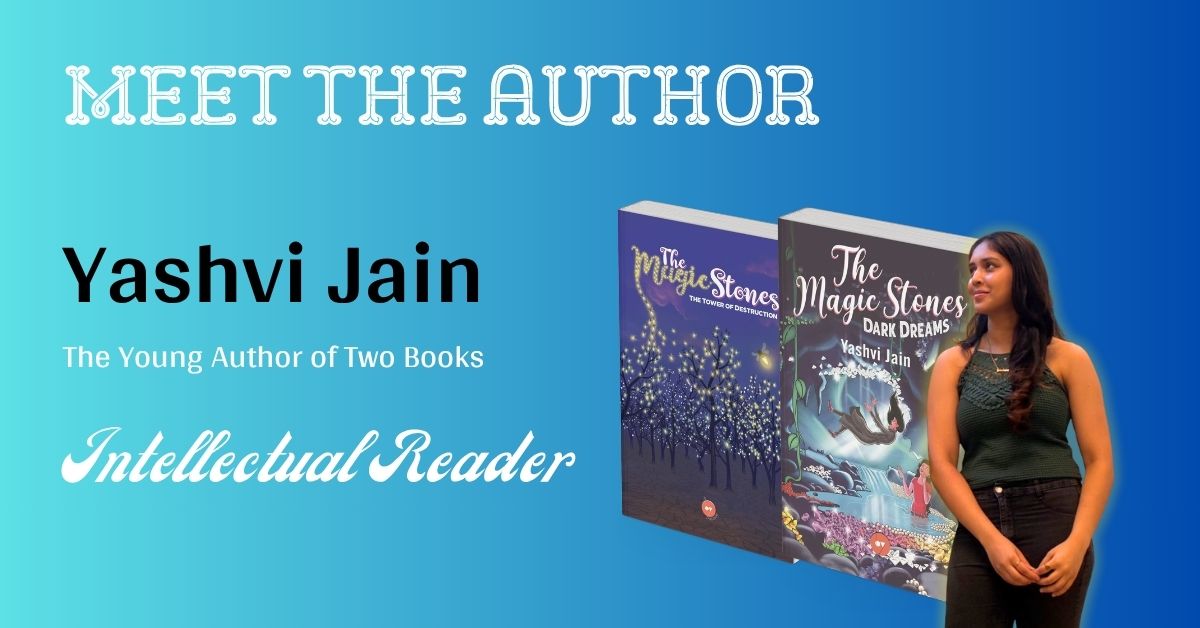
The book’s treatment of mystery and fantasy also demonstrates Jain’s early understanding of the pleasures of serial storytelling. The Magic Stones: Dark Dreams does not attempt to resolve every possibility it introduces. Instead, it progressively widens the horizon of the narrative. The first mystery eventually leads towards the Dark Dreams, a secretive organisation whose leader, Dolores, becomes an important figure in the emerging conflict. By the latter part of the book, Flora and Rosy are confronted with circumstances considerably larger than the carnival mystery with which the narrative began. Dolores reveals that Flora possesses powers beyond the telekinesis she already knows about and attempts to force her into serving his purposes. The book consequently ends by opening a door rather than closing the entire fictional architecture. Its final movement introduces the headquarters of the Dark Dreams and explicitly signals continuation into the next book. From a conventional standalone-fiction perspective, this may leave some readers wanting greater closure. From the perspective of a developing series, however, it is strategically useful. Jain clearly wants her readers to understand that the carnival adventure was only the beginning. The later development of the series confirms that this was not an empty promise. The second volume expands the mythology considerably, introducing Astrolen, new powers, the Tower of Destruction and a larger conflict involving the survival of an entire population. Read in that broader context, Dark Dreams assumes the role of a foundational volume: it establishes the protagonists, introduces the central magical vocabulary and creates the questions that subsequent fiction can develop.
The book’s most significant quality, however, may lie in what it reveals about Jain’s vision of writing for children. She is clearly interested in entertainment, but she does not regard children’s fiction as merely an escape from reality. Her stated philosophy is that storytelling can allow young readers to encounter moral questions without being subjected to direct instruction. This intention is already visible in the way Dark Dreams treats its characters and conflicts. Even the resolution of the initial carnival mystery does not present wrongdoing as entirely detached from motive. The mysterious prankster turns out to have acted out of frustration with being forced to attend the carnival, transforming what initially appears to be a simple good-versus-bad mystery into a situation involving motivation and resentment. More importantly, Jain’s conception of the series challenges the conventional certainty of children’s fantasy. She has expressed a desire to question the simplistic division between heroes and villains and to create situations in which readers have to reconsider moral labels. Dark Dreams only begins this project, and its moral architecture remains considerably simpler than the author’s stated ambitions, but the direction is visible. Flora’s refusal to use her powers for an evil purpose, her uncertainty about what she is capable of, and the revelation that apparently straightforward relationships conceal larger truths establish the foundations for the moral complications developed more substantially in the sequel. The book’s dedication, addressed to readers who have “always wanted to be different,” also provides a useful key to Jain’s project. Difference is not presented merely as an eccentricity; it becomes connected with identity, ability, discovery and the courage to negotiate an unfamiliar world.
For its intended audience, this combination of adventure, humour, fantasy and mystery is likely to be the book’s strongest appeal. Young readers who enjoy fast-moving plots, imaginative settings, supernatural abilities and protagonists close to their own age will find considerable material here. Jain does not write down to her audience. Her characters are allowed to be frightened, curious, sarcastic, impulsive and occasionally foolish. The friendships between Flora, Rosy and James provide an emotional centre, while the constant introduction of clues and unexplained phenomena encourages the reader to continue. The book is also particularly well suited to readers who enjoy visual imagination. The rainbow ghost cave, magical stones, hidden spaces and supernatural figures give the narrative a strong pictorial quality, and the illustrations accompanying the published volume complement this dimension of the work. The suspense is generally accessible rather than psychologically oppressive, making the book appropriate for young readers seeking excitement without the sustained darkness of more mature fantasy. Its humour further moderates the more threatening elements. Even during moments of physical danger, Flora’s voice retains a playful quality, and the friendship between the protagonists prevents the story from becoming relentlessly grim.
As a debut by a very young children’s author, The Magic Stones: Dark Dreams is therefore more significant as an indication of potential than as a finished literary achievement. It would be neither fair nor useful to judge it solely by the standards applied to an established fantasy novelist. The book has clear weaknesses in prose control, structural economy and stylistic discipline, and these are precisely the areas in which Jain’s future development will need to concentrate. But the manuscript also demonstrates several qualities that are considerably harder to acquire: a sustained imaginative impulse, an instinct for narrative movement, an understanding of the appeal of mystery, a natural comic sensibility and, most importantly, the desire to build a fictional world larger than a single adventure. The progression from the first book to The Magic Stones II already suggests that Jain is capable of expanding rather than merely repeating her imaginative premises. Her debut should consequently be read as the beginning of a literary apprenticeship rather than its conclusion. The Magic Stones: Dark Dreams may not yet possess the stylistic maturity of accomplished children’s fantasy, but it possesses the raw material from which such maturity can develop. Yashvi Jain’s greatest achievement at this stage is not that she has written a book unusually young. It is that, at an age when many young readers are still discovering fictional worlds created by others, she had already begun constructing one of her own. The writing is still developing, but the imagination behind it is substantial, and that makes Yashvi Jain a young author whose future work is worth watching.
You can get a copy from Amazon India – click here to buy now.
Ashish for Intellectual Reader
The Magic Stones: Dark Dreams by Yashvi Jain: a detailed book review
- Intellectual Reader Review
Summary
A promising debut… an interesting premise and many happy readers! A novel that children will immensely enjoy. Recommended.