
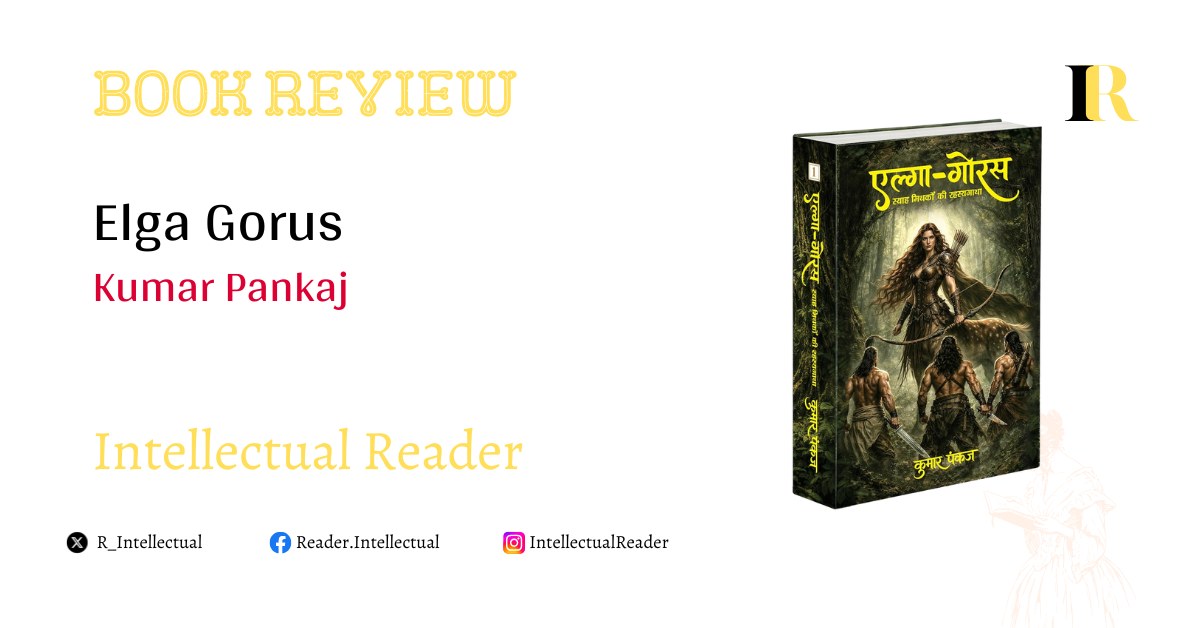
Elga Gorus by Kumar Pankaj is one of those rare books that remind readers why fantasy literature continues to hold such enduring appeal across generations. Spread across two substantial volumes, the novel offers far more than a simple adventure story. It presents an elaborate mythical universe populated by mysterious creatures, ancient secrets, forgotten histories, magical realms, hidden powers, and a remarkable array of memorable characters. At a time when much of contemporary fiction is grounded in realism, Kumar Pankaj has chosen to embrace imagination on a grand scale. The result is a work that feels ambitious, immersive, and refreshingly different within the landscape of modern Hindi literature.
One of the first things that stands out about Elga Gorus is its ability to attract readers from different age groups. Younger readers are likely to be drawn toward the novel’s sense of adventure, mystery, and wonder. The quests, hidden secrets, strange beings, and dangerous journeys create the kind of excitement that has always made fantasy literature so popular. At the same time, mature readers will find much more beneath the surface. The novel contains philosophical undertones, reflections on knowledge and power, emotional conflicts, and symbolic elements that invite deeper interpretation. This dual appeal is not easy to achieve. Many fantasy novels become either too simplistic for experienced readers or too complex for younger audiences. Elga Gorus manages to strike a balance that allows readers with different expectations to enjoy the same story for different reasons.
The novel’s world-building deserves special praise. Kumar Pankaj has not simply created a fictional setting. He has created an entire ecosystem of myths, legends, creatures, traditions, mysteries, and landscapes. Readers encounter ancient books engraved upon wax tablets, forgotten scripts, secret histories, strange civilisations, and mysterious races that seem to exist beyond ordinary human understanding. There is a constant feeling that the world extends far beyond the boundaries of the immediate narrative. Every location appears to possess its own history, and every mystery hints at something even larger waiting to be discovered.
This sense of scale becomes even more impressive when one considers the variety of environments presented throughout the two volumes. The story moves through mysterious caves, dangerous forests, hidden settlements, deserts, ruined landscapes, and strange territories inhabited by unusual beings. These locations are not merely backdrops. They actively contribute to the atmosphere and emotional tone of the narrative. Kumar Pankaj demonstrates a remarkable visual imagination, allowing readers to picture scenes with extraordinary clarity. Many passages feel almost cinematic. One can easily imagine entire sequences translated into large-scale fantasy films or illustrated novels because of the richness of the imagery.
The magical dimension of Elga Gorus is another area where the novel succeeds admirably. Fantasy literature often relies on magic as a convenient storytelling device. In this novel, however, mystery and magic feel integrated into the fabric of the world itself. Magical elements emerge through ancient knowledge, mythical beings, hidden powers, sacred objects, and mysterious forces operating beneath the visible surface of reality. The magic rarely feels arbitrary. Instead, it contributes to the larger mythology of the story. Readers gradually learn that behind every strange occurrence lies a deeper network of secrets and histories.
The novel’s treatment of characters is equally impressive. One of the most challenging aspects of writing large-scale fantasy is managing a substantial cast of characters while maintaining reader engagement. Kumar Pankaj approaches this challenge with considerable confidence. The world of Elga Gorus contains numerous characters, many of whom could easily serve as protagonists in their own separate stories. There are warriors, wanderers, mystics, ancient beings, mysterious creatures, and individuals whose motives remain hidden for much of the narrative.
What is particularly noteworthy is the individuality of these characters. They do not blend into one another despite their numbers. Each carries distinct characteristics, emotional concerns, and narrative significance. Some inspire curiosity. Others evoke fear, admiration, sympathy, or suspicion. As readers move through the two volumes, they gradually develop emotional connections with many of these figures. This emotional investment helps sustain interest even during sections where the mythology becomes especially elaborate.
The central quest involving the sacred book Elga Gorus provides the narrative with a strong sense of purpose. The search for this extraordinary text becomes much more than a physical journey. It evolves into a larger exploration of knowledge, secrecy, power, and destiny. Along the way, readers encounter unexpected revelations, hidden agendas, dangerous confrontations, and fascinating discoveries. Kumar Pankaj demonstrates a strong understanding of suspense. He knows how to reveal information gradually while preserving a sense of mystery. Every answer tends to generate new questions, encouraging readers to continue turning pages.
One of the most enjoyable aspects of reading the two volumes together is witnessing how the story expands over time. The first volume introduces readers to the world and establishes its major mysteries. It builds curiosity and lays the foundation for what follows. The second volume then takes these elements and develops them further. The mythology becomes richer, the mysteries become deeper, and the emotional stakes become more significant. Many readers may find the second volume even more engaging because it benefits from the groundwork established earlier. By the time readers reach the latter stages of the story, they feel fully immersed in the world and invested in its outcomes.
The language of the novel also deserves recognition. Kumar Pankaj clearly possesses a strong command over descriptive writing. His prose frequently creates vivid visual impressions. Descriptions of creatures, landscapes, magical phenomena, and mysterious locations are often memorable because of their specificity and imaginative detail. The author also introduces numerous original terms and concepts, helping to establish the uniqueness of the fictional world. This linguistic creativity contributes significantly to the novel’s atmosphere.
Another admirable quality is the novel’s connection to the broader tradition of Hindi mystery and tilism literature. Readers familiar with the legacy of Devaki Nandan Khatri and the enduring popularity of Chandrakanta will likely notice certain thematic resonances. The sense of hidden knowledge, elaborate mysteries, secret locations, and continual revelation recalls aspects of that tradition. At the same time, Elga Gorus does not simply imitate earlier works. Kumar Pankaj attempts to build something distinct and contemporary. He combines traditional elements of tilism with modern fantasy storytelling, creating a hybrid form that feels both familiar and fresh.
One of the reasons the novel remains engaging across its considerable length is its constant sense of movement. There is always another mystery to investigate, another strange realm to explore, another creature to encounter, or another secret waiting to be uncovered. This forward momentum keeps the narrative lively and prevents the story from becoming stagnant. Readers who enjoy exploration-based fantasy will find much to appreciate here.
That said, no ambitious work is entirely without limitations. The very qualities that make Elga Gorus impressive may also present challenges for some readers. The sheer number of characters can occasionally feel overwhelming, particularly during the early stages of the narrative. Readers may need time to become familiar with the various personalities, relationships, and storylines. Those accustomed to compact novels with a small cast may initially find the scale intimidating.
Similarly, the complexity of the world-building requires attention and patience. Kumar Pankaj introduces numerous concepts, creatures, locations, and mythological elements throughout the two volumes. Readers seeking a fast and straightforward narrative may occasionally feel overwhelmed by the density of information. Some sections focus heavily on atmosphere, mythology, or mystery-building rather than immediate action. While many fantasy enthusiasts will appreciate this richness, others may prefer a more streamlined approach.
Another possible limitation involves the pacing. Because the novel is committed to developing an expansive world, certain portions unfold gradually. Readers expecting continuous action from beginning to end may find some passages slower than anticipated. However, these sections often serve an important purpose by enriching the mythology and strengthening the immersive quality of the narrative.
Yet it is worth noting that these limitations emerge largely from the novel’s ambition rather than from a lack of skill. Kumar Pankaj is attempting something substantial. He is not merely telling a story. He is constructing an entire mythological universe. Such projects inevitably demand patience from readers. Those willing to invest that patience are likely to find the rewards considerable.
Perhaps the most impressive achievement of Elga Gorus is the sense of wonder it sustains across two volumes. Wonder is one of the most difficult emotions for any fantasy writer to create and maintain. Many novels begin with fascinating ideas but gradually lose their ability to surprise. Kumar Pankaj largely avoids this problem. New mysteries, creatures, locations, and revelations continue to appear throughout the narrative, ensuring that curiosity remains alive.
By the end of both volumes, readers feel they have completed a significant journey. They have travelled through mysterious realms, encountered unforgettable characters, witnessed magical phenomena, explored ancient secrets, and participated in a vast mythological adventure. Few contemporary Hindi fantasy novels attempt this level of scope, and fewer still manage to sustain it across such an extensive narrative.
Ultimately, Elga Gorus stands as an ambitious, imaginative, and highly engaging contribution to modern Hindi fantasy literature. It successfully revives elements of the classic tilism tradition while introducing its own mythology, characters, and narrative identity. Its vivid imagery, expansive world-building, memorable cast, and strong sense of mystery make it an enjoyable experience for readers across age groups. While its complexity and scale may occasionally challenge some readers, those willing to immerse themselves fully in its world will discover a richly rewarding adventure. Kumar Pankaj deserves considerable appreciation for undertaking such an ambitious project and for creating a fictional universe that feels alive, mysterious, and wonderfully imaginative from beginning to end.
Get a copy of the novel – click here to buy it on Amazon.
Review by Chandan for Intellectual Reader